
How many restrooms does a county fair need in Redwood City?
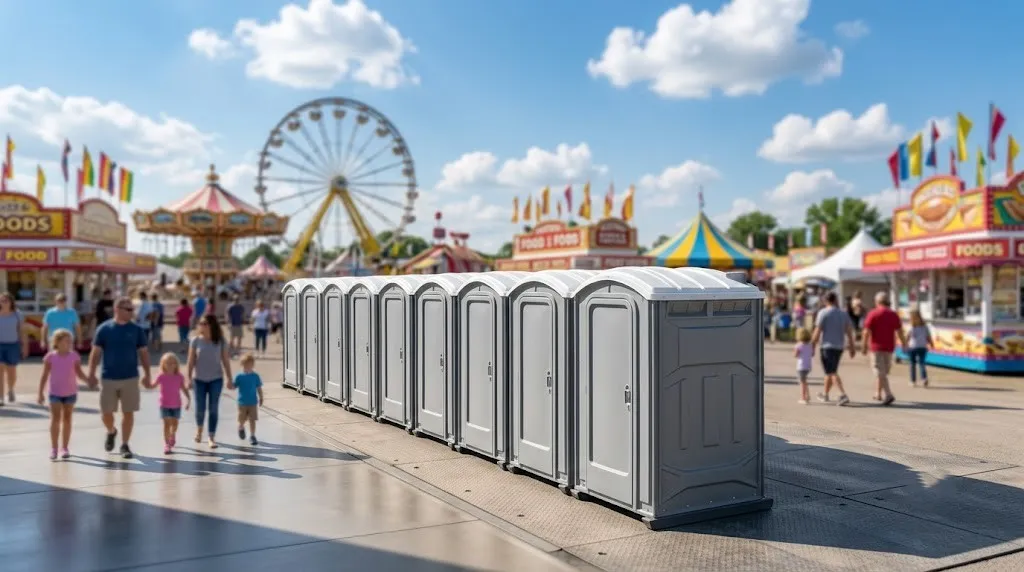
Start with attendance, then work backward. A single-day fair drawing 2,000 people across eight hours needs more units than the same crowd spread over a three-day run, because usage compresses. Redwood City Porta Pros typically recommends standard portable toilets as the base layer, then layers in deluxe flushable units near VIP areas or beer gardens where guests expect something closer to a real bathroom. Every cluster needs an accessible unit under ADA Standards section 213.2, which requires at least 5 percent of units in a group to be ADA compliant, never fewer than one. ADA units also need a 60 inch turning space inside per ADA Standards section 304.3.1 and a 32 inch clear door opening under ADA Standards section 404.2.3. If your fair runs food vendors, expect to add handwashing stations near every booth, not just at the restroom bank. For fairs expecting heavier crowds or multi-day traffic, a restroom trailer handles volume better than a bank of standard units and gives guests real sinks. Not sure where to start counting? The porta potty placement guide walks through spacing and sightline planning specific to fairground layouts, and our how many porta potties do I need breakdown covers the math step by step.
What restroom options work best for a county fair?
Fairs are not one-size events, so the mix matters more than the total count. A midway with games and rides can run on standard portable toilets spaced along the walking loop, each with a 60 to 70 gallon holding tank sized for high daily turnover. Grandstand or entertainment areas benefit from an 8 stall restroom trailer or 4 stall restroom trailer, since long lines during a headline act move faster through multiple stalls than through single units spread thin. If your fair includes a beer garden or ticketed area, a luxury restroom trailer gives that section its own dedicated facilities, separate from general midway traffic. Livestock barns and 4-H areas near agricultural exhibits often need their own farm and agricultural restrooms setup, since foot traffic there runs on a different schedule than the carnival side. Vendors selling fried food or working grills should have handwashing stations within reach, and any grease from concession cooking should route to proper disposal rather than a floor drain, since a grease interceptor is serviced once fats, oils and solids reach 25 percent of liquid depth. Redwood City sits close enough to draw crowds from Menlo Park, 6.0 miles southeast, and San Carlos, 6.4 miles west, so plan capacity for regional turnout, not just local foot traffic.
Are there rules for restroom placement at outdoor fairs in Redwood City?
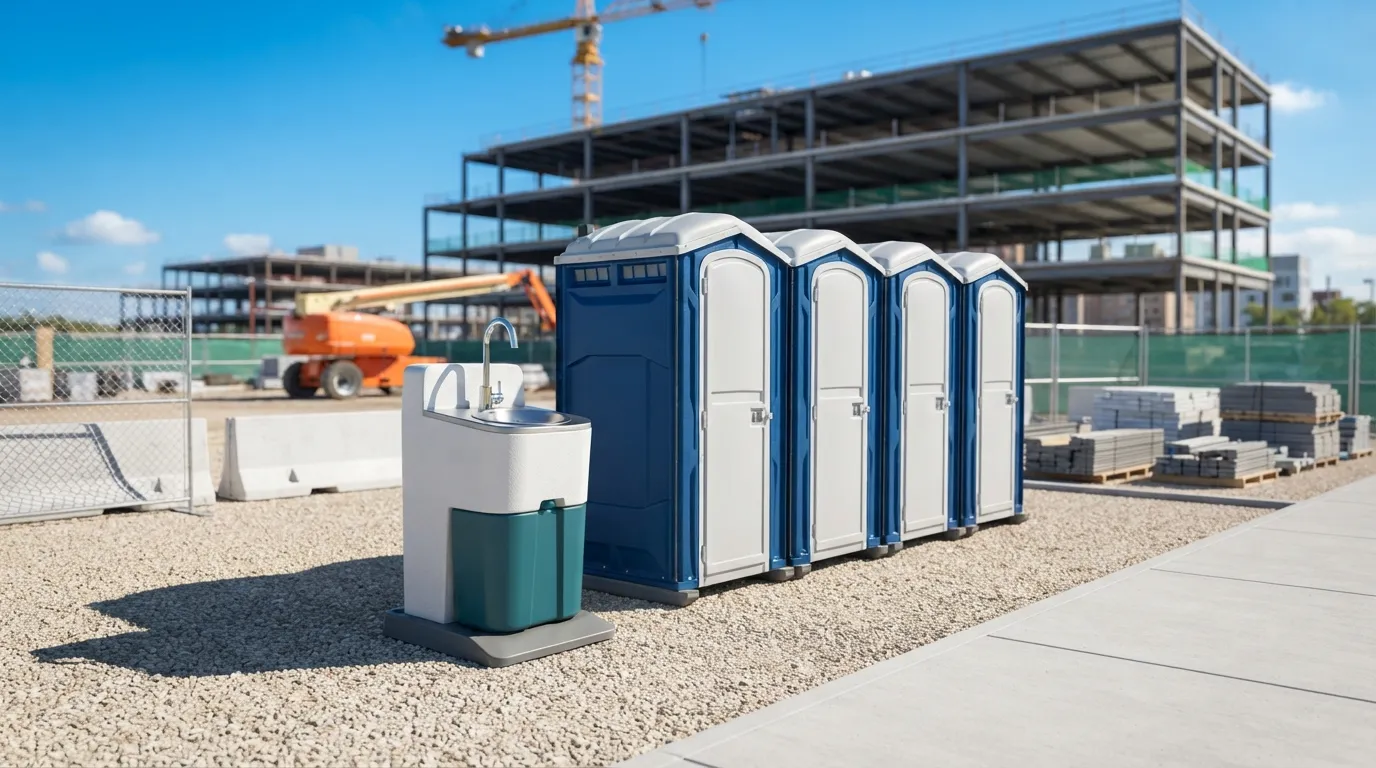
Placement in the public right of way needs confirming with the city before you finalize your site map, since fairground layouts often push units toward street frontage or public parking areas. Beyond that, general sanitation planning follows OSHA 1926.51(c) for worker-facing facilities if your fair employs setup crews, vendors or contracted staff on site, and separate consumer-facing units should be planned around guest flow rather than worker ratios. Every accessible route between restroom clusters needs a minimum 36 inch clear width under ADA Standards section 403.5.1, which matters on grass or gravel fairgrounds where surfaces can narrow fast once crowds and vendor tents move in. Ground surfaces themselves need to stay stable, firm and slip resistant per ADA Standards section 302.1, so plan matting or decking under units placed on soft turf. Redwood City fair organizers working with temporary fencing to define restroom zones or vendor corridors should also budget for crowd control barriers near high-traffic restroom banks, since queues at peak hours tend to spill into walkways. If your event runs after dark, pair restroom clusters with a light tower so guests can find and navigate units safely once the sun goes down.
Frequently Asked Questions
How far in advance should we book county fair restrooms?
Book as soon as your site plan is set, ideally 60 to 90 days out for a large fair. Redwood City Porta Pros needs lead time to confirm unit counts, ADA compliance under ADA Standards section 213.2, and delivery logistics, especially if your fairground has limited truck access.
Do we need ADA-accessible units even for a small fair?
Yes. Any cluster of portable toilets needs at least one ADA unit, per ADA Standards section 213.2, even if your fair only sets out a handful of standard units. It is not tied to total attendance size.
Can restroom trailers handle multi-day fairs?
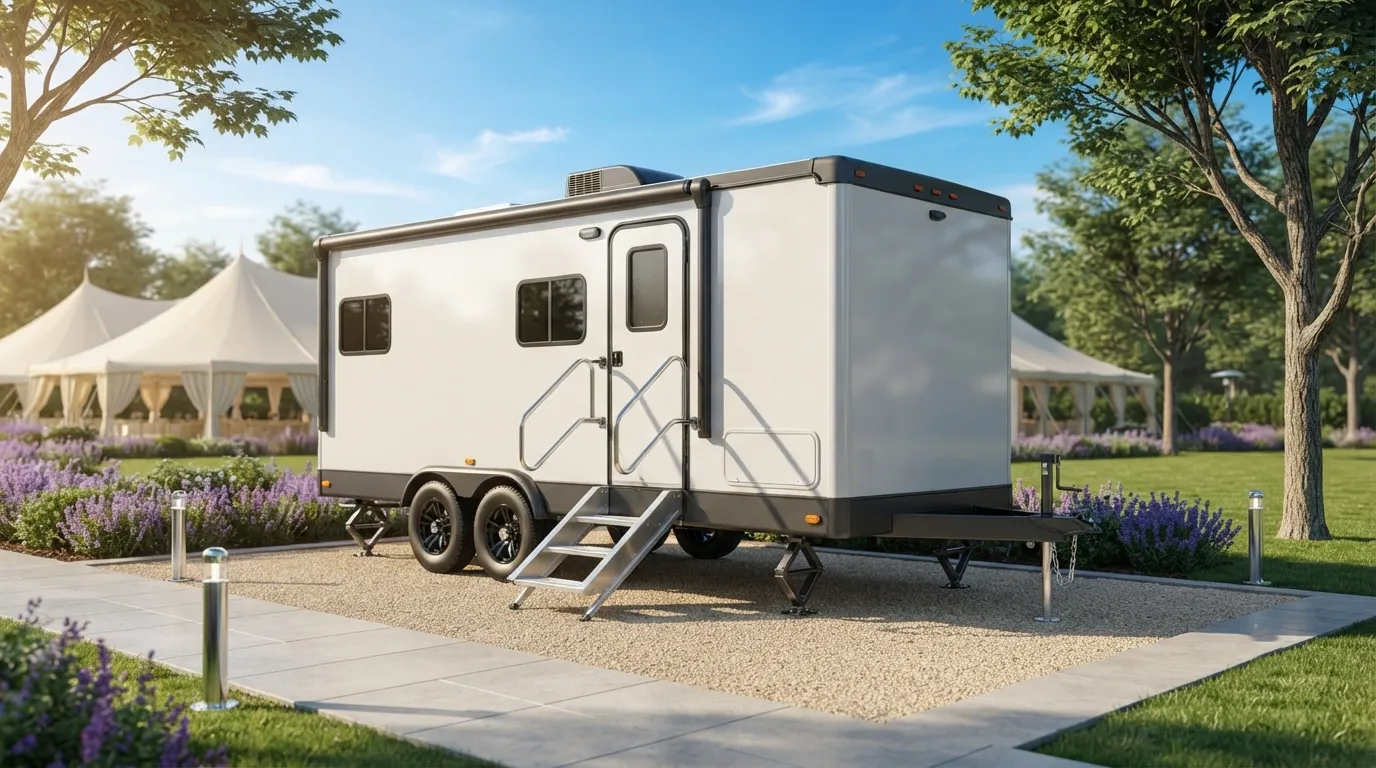
Yes, and they often work better than standard units for anything running more than one day. A restroom trailer holds up to repeated servicing and heavy traffic, and options like the 2 stall restroom trailer suit smaller VIP or staff areas.
What about handwashing near food vendors?
Every food booth should have a dedicated handwashing station nearby, separate from general restroom clusters. Under 29 CFR 1910.141(d)(2), washing facilities need soap and towels or a hand-drying device; hand sanitizer alone does not meet that standard.
How much does a county fair restroom setup cost?
Cost depends on unit mix, count and rental length. Check porta potty rental cost and restroom trailer rental cost for current pricing bands, or request a quote directly for a fair-specific estimate.
Next step
Get a delivery date
Tell us the address, the dates and the headcount. We size the order and confirm the route.