
How fast can you deliver during an emergency in Redwood City?
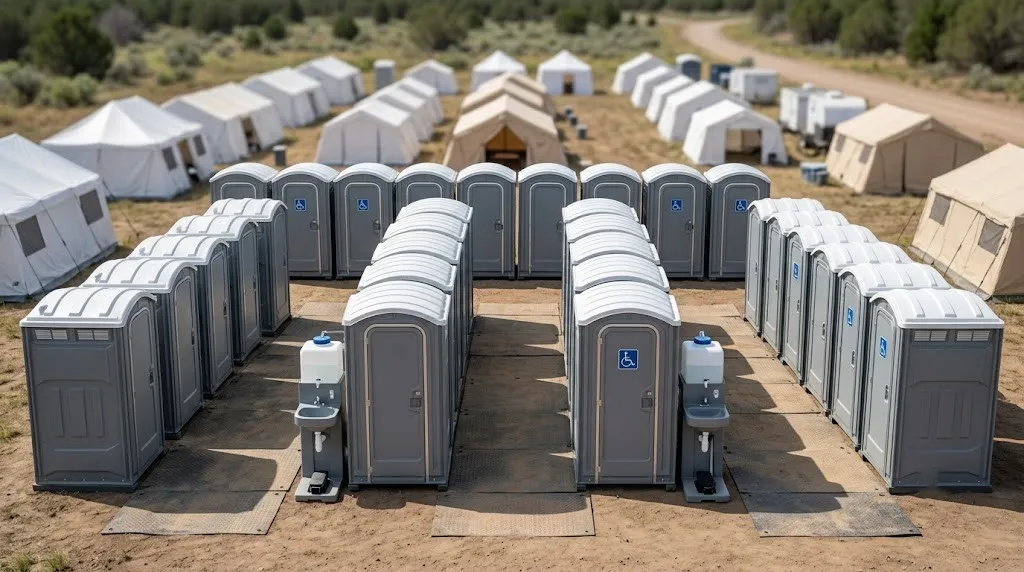
Speed is the whole job here. When water lines are down or a septic system has failed after flooding, emergency porta potty rental is built around same-day dispatch, not a standard delivery window. We stage standard portable toilets and handwashing station rental units so a Red Cross shelter, a city staging area or a damaged apartment complex in Redwood City has working sanitation before the day ends. If your situation involves a failed septic system rather than a missing one, emergency septic service covers pump-outs, and a typical residential tank is pumped every 3 to 5 years under normal use, so a sudden failure outside that window usually points to storm intrusion or a cracked line. We also bring portable sink rental units where power and water are both out, since OSHA 1926.51(a)(1) requires an adequate supply of potable water at any place of employment, and that standard does not pause for a disaster. Crews clearing debris need the same coverage as a normal jobsite: OSHA 1926.51(c) sets toilet counts by crew size, one facility for 20 workers or fewer, scaling up from there. If the event pulls in outside responders or agricultural crews, farm and agricultural restrooms and construction site services both apply, since 1928.110 sets its own field sanitation ratio for hand-labor crews. We serve Redwood City directly and can reach Menlo Park, 6.0 miles southeast, or San Carlos, 6.4 miles west, within the same response window.
What sanitation do shelters and staging areas actually need?
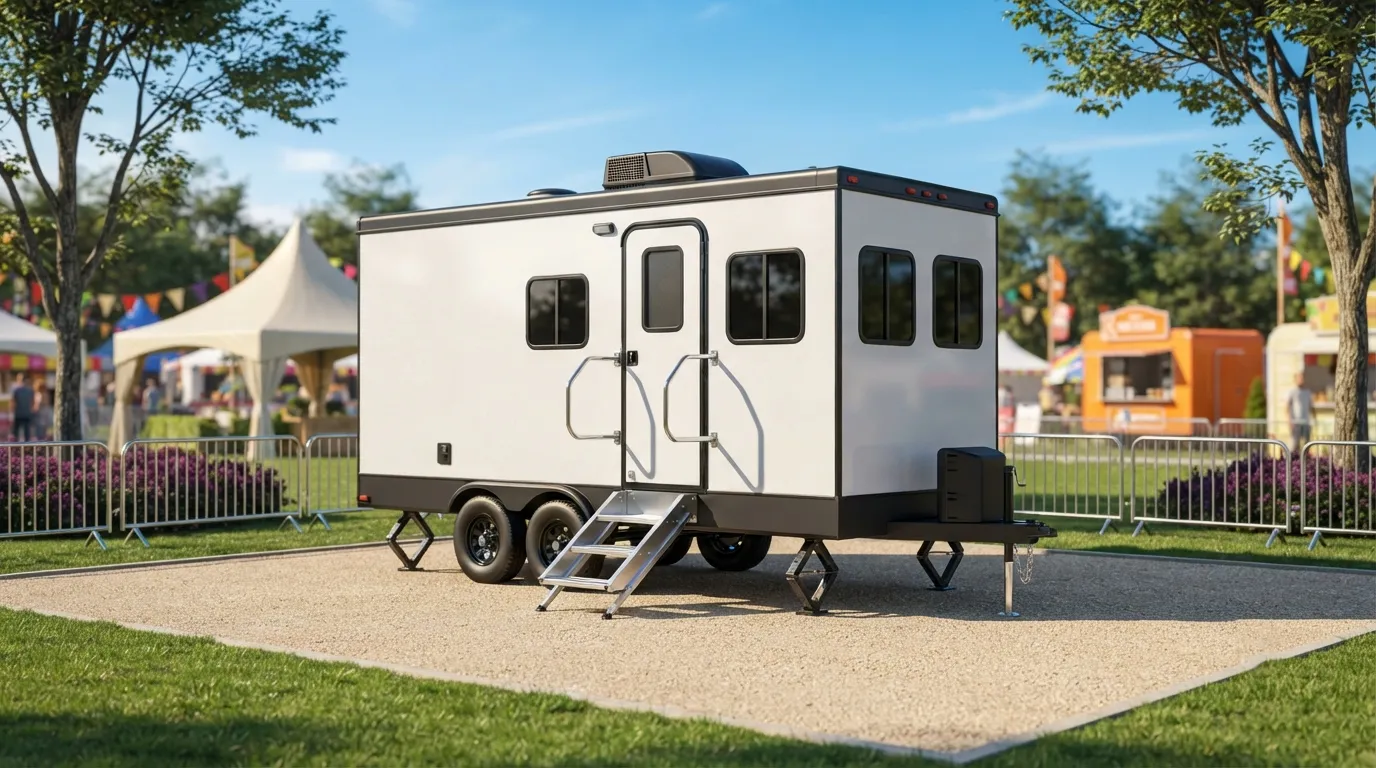
A shelter needs more than a row of toilets; it needs a working, accessible system that holds up under heavy, continuous use. ADA Standards section 213.2 requires that where single-user units are clustered, at least 5 percent must be accessible, never fewer than one, so any shelter deploying six or more standard units needs at least one ADA accessible porta potty in the mix. That unit needs a 60 inch turning circle per ADA 304.3.1 and a 32 inch clear door opening under section 404.2.3, which matters when cots, wheelchairs and relief workers are all moving through the same tight space. For a larger staging site, a restroom trailer rental or a 4 stall restroom trailer handles higher traffic better than scattered singles, and where showers matter for displaced residents or fire crews, a shower trailer rental covers that gap. Handwashing is not optional: 29 CFR 1910.141(d)(2) requires soap and towels or a hand-drying device at wash stations, and hand sanitizer alone does not satisfy it. If cleanup involves paint, solvent or pesticide exposure from flood-damaged buildings, OSHA 1926.51(f)(1) requires washing facilities specifically for that contaminant exposure. Debris from a disaster site also needs a place to go, and a roll-off dumpster rental or construction dumpster rental clears storm debris fast; check what cannot go in a dumpster before loading hazardous flood waste.
Why does site security matter during disaster cleanup?
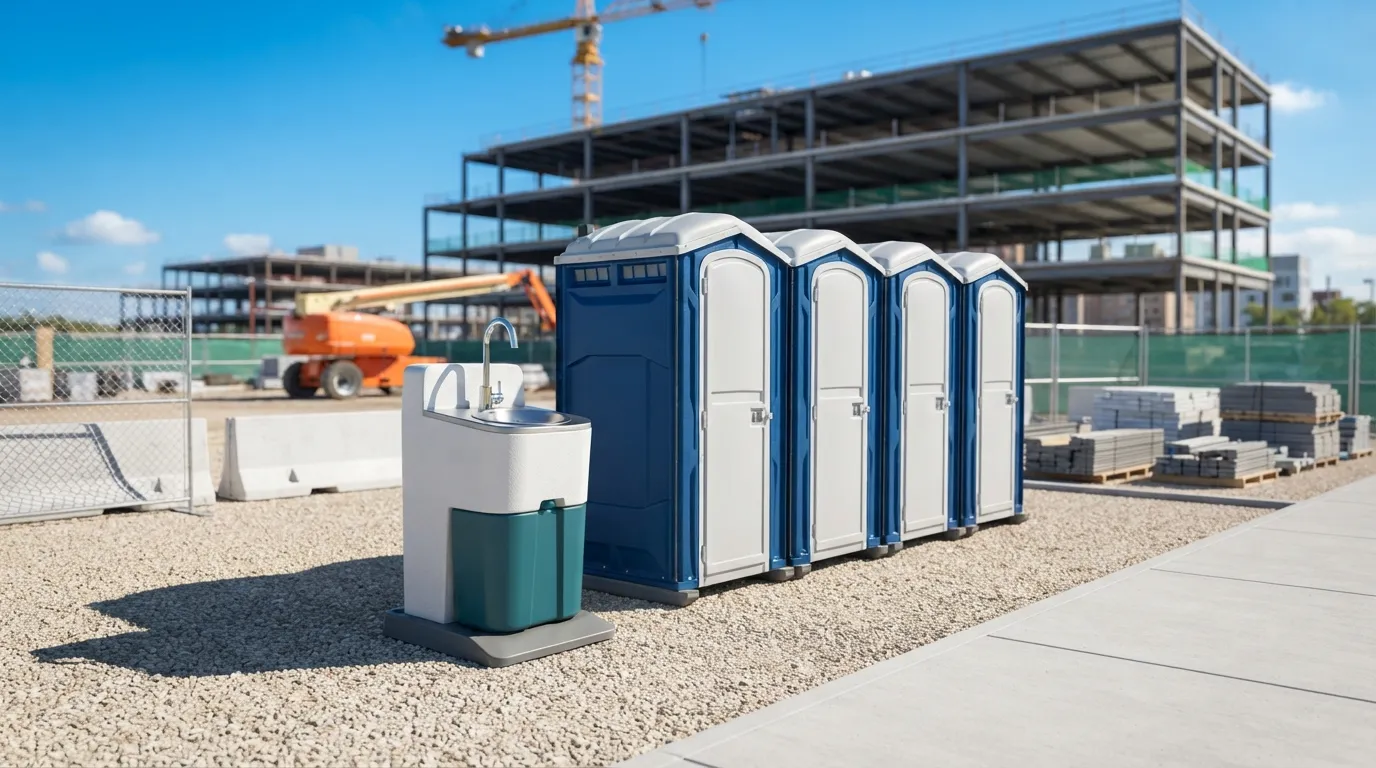
An unsecured relief site invites injury and theft, and that risk climbs when normal barriers, fencing and lighting are gone along with the power. Temporary fence rental or chain link temporary fence keeps displaced residents, media and looters out of active work zones, and OSHA 1926.202 requires barricades to meet ANSI D6.1 wherever employees are working near a hazard. Where debris removal or demolition is happening after dark, OSHA 1926.56(a) sets minimum lighting intensities for construction areas, so a light tower rental is not a convenience, it is close to a requirement once crews work past daylight. Power is usually the first thing to fail, and a temporary power pole with GFCI protection under OSHA 1926.404(b)(1)(ii) gets tools and lighting running safely on generator or temporary service. Storage matters too: a damaged building's contents, records or equipment often need somewhere dry and lockable, and a storage container rental or mobile office trailer rental gives displaced staff a working base. For crews using restrooms in shifts, ANSI/PSAI Z4.3 sets a baseline service interval of once weekly for up to 10 users over a 40 hour week, though disaster response sites usually need more frequent pumping given how heavy the use gets.
| unit | duration | typical | notes |
|---|---|---|---|
| standard | day | $150 | fastest deploy for shelters |
| ada | day | $230 | required at 5%+ of cluster |
| septic | day | $250 | pump-out for failed systems |
| trailer | day | $800 | staging areas, multi-day events |
How do I know how many units to bring in?
Crew and resident counts drive it. Our how many porta potties do I need guide walks through the OSHA 1926.51(c) ratios, and OSHA portable toilet requirements covers the same standard in more depth for responders coordinating a multi-day deployment.
How quickly can Redwood City Porta Pros respond to a flood or fire event?
Same-day delivery is standard for emergency requests, and we can often turn around faster depending on what is already staged nearby. Call ahead with a headcount and site access details; see porta potty placement guide for what we need to know before trucks roll.
Do you provide accessible units for shelters serving elderly or disabled residents?
Yes. ADA Standards section 213.2 requires at least one accessible unit in any cluster, and our ADA accessible porta potty units meet the 32 inch door and 60 inch turning circle specs shelters need.
What happens if a septic system fails during a storm?
We dispatch for pump-outs and can supply a holding tank rental as a stopgap while the system is repaired. Normal tanks are pumped every 3 to 5 years, so storm failure usually means water intrusion or line damage.
Can you supply sanitation for a multi-day shelter operation?
Yes, and multi-day sites usually do better with a 4 stall restroom trailer or 8 stall restroom trailer than scattered singles, since trailers hold up better under continuous shelter traffic.
Do you serve areas outside Redwood City during regional disasters?
Yes. We reach Menlo Park, 6.0 miles southeast, and San Carlos, 6.4 miles west, within the same response window; check service areas for the full coverage map.
Next step
Get a delivery date
Tell us the address, the dates and the headcount. We size the order and confirm the route.